
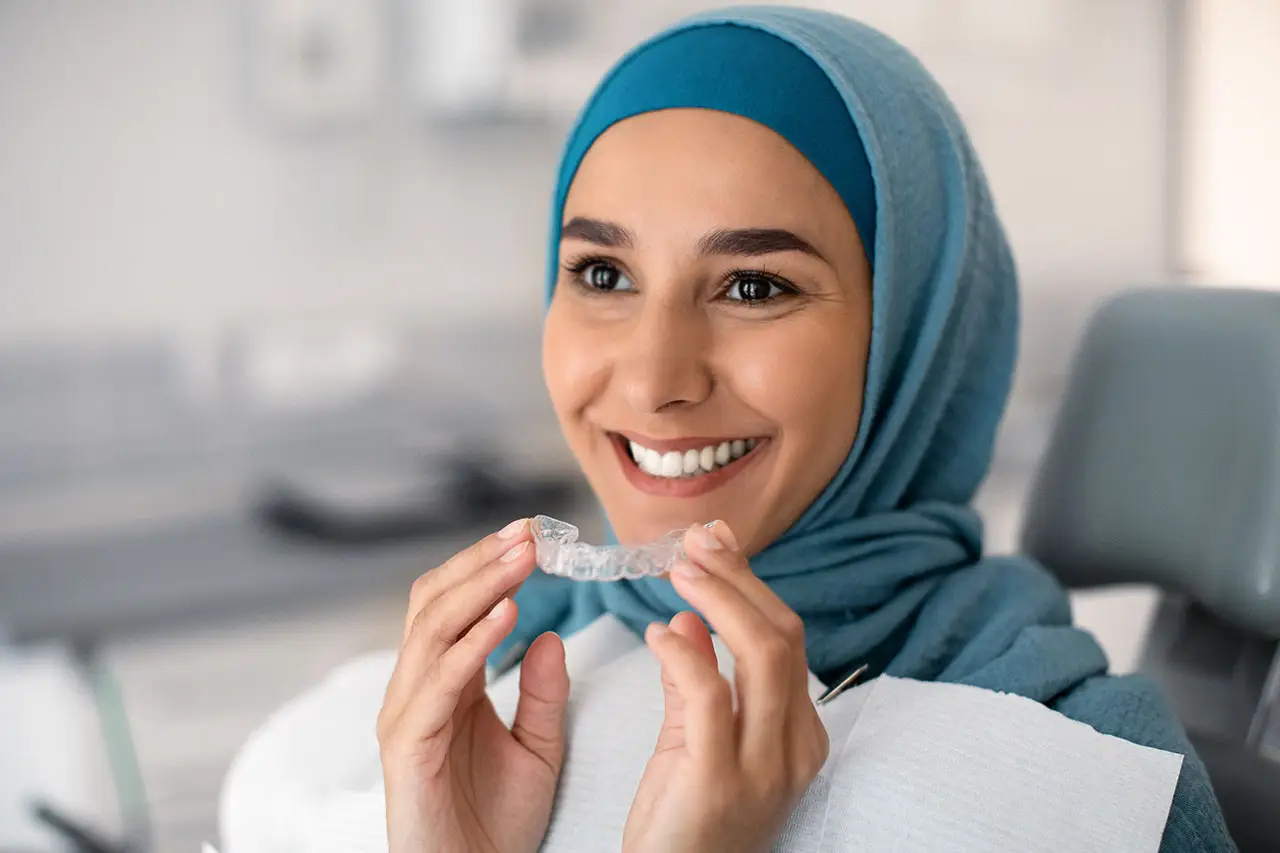
What if improving the alignment of your teeth could fit into your daily routine without traditional metal braces? For many patients, clear aligner treatment offers a more discreet way to address selected orthodontic concerns. Invisalign uses a planned series of removable clear aligners to gradually guide teeth toward improved positions while allowing patients to remove the aligners for meals and daily oral hygiene.
For patients considering Invisalign in Silver Spring, MD, the process begins with more than simply ordering a set of clear trays. The teeth, bite, gums, and overall oral health need to be evaluated first. CK Family Dental provides Invisalign treatment with digital orthodontic evaluation, customized aligner planning, progress monitoring, and retention planning. Learn more about the practice’s Invisalign clear aligner services and what treatment may involve.
What Is Invisalign?
Invisalign is a clear aligner system designed to move teeth gradually according to a customized treatment plan. Instead of using traditional brackets and wires, patients wear a series of clear trays that are designed to guide the teeth toward planned positions.
Each set of aligners is worn according to the dentist’s instructions. As treatment progresses, patients move through the planned sequence.
Because the aligners are removable, patients can take them out for eating, drinking, brushing, and cleaning between their teeth. That flexibility is one reason clear aligners are appealing to many adults and teens.
However, removable aligners also require responsibility. The treatment only works as planned when patients wear the aligners as instructed.
What Dental Problems Can Invisalign Address?
Invisalign can be used to address selected orthodontic concerns involving tooth alignment. Depending on the treatment plan, clear aligners may help with crowding, spacing, certain bite concerns, and tooth rotation.
The exact types of movement possible depend on the patient’s teeth, bone support, bite, and treatment goals. Not every orthodontic problem can be treated with clear aligners alone.
That is why an examination is important. The dentist needs to determine whether Invisalign can predictably address the patient’s specific concern or whether another orthodontic approach would be more appropriate.
Why Tooth Alignment Matters Beyond Appearance
Straighter teeth can change the appearance of a smile, but alignment can also affect oral hygiene and function.
Crowded teeth may create areas that are harder to brush and clean between. When teeth overlap or sit at unusual angles, plaque can become more difficult to remove.
Alignment can also affect the way upper and lower teeth meet. Certain bite problems may place uneven forces on teeth or make chewing less comfortable.
Improving alignment does not guarantee perfect oral health, but it can be one part of a larger plan that supports easier cleaning and balanced function.
What Happens During An Invisalign Consultation?
The process begins with an evaluation. The dentist examines the teeth, gums, bite, and overall oral health and discusses what the patient wants to change.
Digital orthodontic evaluation may be used to assess tooth positions and plan treatment. The dentist can then determine whether Invisalign is appropriate and explain what movements are realistic.
If treatment is recommended, a customized series of aligners is planned. The number of aligners and overall treatment time vary based on the complexity of the case.
Patients should ask about expected treatment time, wear instructions, check-ins, attachments, refinements, and retention before beginning.
How Do Invisalign Aligners Move Teeth?
Each aligner is designed to create gentle pressure on specific teeth. Over time, the teeth gradually move toward the planned positions.
The aligners are not identical. Each stage of treatment is slightly different, creating a sequence of small movements rather than attempting to move the teeth into their final positions all at once.
This gradual process is why consistency matters. Wearing an aligner for less time than recommended can interfere with the planned sequence.
If an aligner no longer fits properly or a patient has trouble wearing it, the dental team should be contacted rather than simply skipping ahead.
What Are Invisalign Attachments?
Some Invisalign patients need small attachments placed on selected teeth. These tooth-colored shapes give the aligners additional surfaces to grip and can help produce certain types of tooth movement.
Attachments are planned as part of the treatment design. Not every patient needs the same number or type of attachments.
Because attachments can be subtle, they generally work with the clear aligner approach while providing additional control over tooth movement.
Can I Eat Normally With Invisalign?
One of the main conveniences of clear aligners is that they are removable for meals. Patients can take the aligners out before eating and then put them back in after cleaning their teeth.
This differs from traditional braces, where certain foods may need to be avoided because they can damage brackets or wires.
Even though aligners are removable, patients should not leave them out for long periods without a reason. Consistent wear is important to keeping treatment on schedule.
Water is generally the simplest choice while wearing aligners. If a patient consumes anything other than water, the aligners may need to be removed and the teeth cleaned before putting them back in, according to the treatment instructions.
How Do I Clean Invisalign Aligners?
Keeping aligners clean is an important part of treatment. Patients should follow the cleaning instructions provided by the dental team.
Daily brushing and cleaning between teeth are also essential. Aligners fit closely over the teeth, so putting them over teeth that have not been cleaned can trap plaque against the tooth surfaces.
Patients should also handle the aligners carefully. When they are not being worn, storing them in their case can reduce the chance of damage or loss.
Keeping track of the aligners is especially important for patients who remove them frequently during meals.
How Long Does Invisalign Take?
There is no single treatment length that applies to every patient. Simple alignment concerns may require a different number of aligners than more complex bite or spacing issues.
The dentist can provide an estimated treatment timeline after evaluating the teeth and creating a plan. Treatment time can also change if the teeth do not move according to the expected schedule.
Regular check-ins help the dentist monitor progress. If adjustments are needed, refinement aligners may be incorporated into the plan.
Patients should avoid comparing their treatment timeline with someone else’s. Two patients with similar-looking concerns can still require different amounts of tooth movement.
What Happens If I Do Not Wear My Aligners Enough?
Invisalign depends on consistent wear. If aligners are removed for long periods or are not worn according to instructions, the teeth may not move as planned.
This can affect the fit of the next aligner and may extend the treatment timeline.
Patients who have difficulty keeping up with wear should tell the dental team. It is better to discuss the problem early than to continue moving through the aligner sequence without proper fit.
A clear aligner treatment plan is a partnership between the dentist and patient. The dentist provides the plan and monitors progress, while the patient controls much of the daily wear.
Benefits of Invisalign
- Discreet appearance: Clear aligners are designed to be less noticeable than traditional metal braces.
- Removable design: Patients can remove the aligners for meals and daily oral hygiene.
- Improved cleaning access: Removing the aligners makes it possible to brush and clean between teeth normally.
- Customized treatment: Each series of aligners is planned around the patient’s tooth positions and treatment goals.
- Progress monitoring: Regular appointments allow the dentist to check how the teeth are responding.
- Flexible daily routine: Patients can remove aligners for special occasions when appropriate, while following the recommended wear schedule.
- Alignment and function: Improving tooth position can support easier cleaning and a more balanced bite when appropriate.
- Retention planning: Retainers can help maintain the new tooth positions after active treatment is completed.
What Happens After Invisalign Treatment?
Finishing the last aligner does not mean the treatment is completely finished. Teeth can shift after orthodontic treatment if they are not retained in their new positions.
Retention is therefore an important part of the Invisalign process. The dentist can recommend a retention plan based on the patient’s treatment and needs.
Retainers may be removable and need to be worn according to the dentist’s instructions. Consistency is important because the teeth can gradually move when retainers are not used as recommended.
Patients should also continue regular dental examinations and professional cleanings after Invisalign treatment. Straighter teeth still need lifelong preventive care.
Invisalign And Oral Hygiene
Clear aligners can make daily hygiene easier because they are removable. However, that convenience does not automatically mean the teeth will stay healthy.
Patients need to brush thoroughly and clean between their teeth every day. The gums should also be monitored for signs of irritation, swelling, or bleeding.
Before beginning Invisalign, cavities and active gum problems may need to be addressed. Orthodontic movement is easier to manage when the teeth and gums have a healthy foundation.
During treatment, patients should continue regular dental checkups. The dentist can monitor both alignment progress and overall oral health.
Is Invisalign Right For Adults?
Adults can be excellent candidates for Invisalign when their teeth and gums are healthy and their alignment concerns are suitable for clear aligner treatment.
Many adults appreciate the discreet appearance and removable design. Invisalign can fit around work, social activities, meals, and regular oral hygiene.
However, convenience does not eliminate the need for commitment. Adults need to wear the aligners consistently and attend scheduled appointments.
Patients who have crowns, bridges, missing teeth, or other dental work can still ask about Invisalign. The dentist can evaluate how existing dental work affects the treatment plan.
Is Invisalign Right For Teens?
Teens may also be candidates for clear aligners depending on their dental development and ability to follow the treatment plan.
Because Invisalign aligners are removable, teens need to understand the importance of keeping track of them and wearing them as instructed.
Parents can help by making sure aligners are stored safely and that appointments are kept on schedule. The dental team can explain responsibilities to both the teen and parent before treatment begins.
What If Invisalign Is Not The Best Option?
Not every patient is an Invisalign candidate, and that is okay. The goal of orthodontic treatment is to move the teeth safely and predictably.
If clear aligners cannot address the patient’s needs effectively, the dentist may recommend another orthodontic approach or explain whether treatment should be referred to a specialist.
A consultation is valuable because it provides a clear answer based on the patient’s actual bite and tooth positions rather than assumptions.
A Clearer Path To A More Balanced Smile
Invisalign provides a discreet approach to selected orthodontic concerns by using removable clear aligners to guide teeth toward improved positions. The treatment can fit into daily routines while allowing patients to remove the aligners for meals and oral hygiene.
Successful treatment depends on proper planning, consistent wear, regular progress checks, good oral hygiene, and retention after active treatment. The best way to know whether Invisalign is appropriate is through an individual evaluation.
If you are considering Invisalign in Silver Spring, contact CK Family Dental at (301) 236-9000 or visit 15434 New Hampshire Ave, Silver Spring, MD 20905 to Schedule a Consultation and learn whether clear aligner treatment fits your smile goals.